

Choosing the right CSS framework can shape the entire development experience of your project. Among the most popular options today are Bootstrap and Tailwind CSS—two powerful tools with completely different philosophies.
Bootstrap has been a go-to framework for over a decade, offering pre-designed UI components that help developers build websites quickly. Tailwind CSS, on the other hand, is a modern utility-first framework that gives developers complete control over design without writing custom CSS.
This blog will explore their differences, strengths, weaknesses, and ideal use cases so you can confidently decide which one fits your next project.
What is Bootstrap?
Bootstrap is a component-based front-end framework that provides ready-made UI elements like buttons, navbars, modals, and forms.
It was designed to help developers build responsive websites quickly by using predefined classes and a powerful grid system. Bootstrap ensures consistency across browsers and reduces the need for custom styling.
One of its biggest advantages is speed—you can build a working interface in minutes using prebuilt components.
What is Tailwind CSS?
Tailwind CSS is a utility-first CSS framework that provides low-level classes for styling elements directly in HTML.
This approach allows developers to create completely custom designs without writing traditional CSS.
Core Philosophy: The Biggest Difference
The main difference between Bootstrap and Tailwind lies in their philosophy:
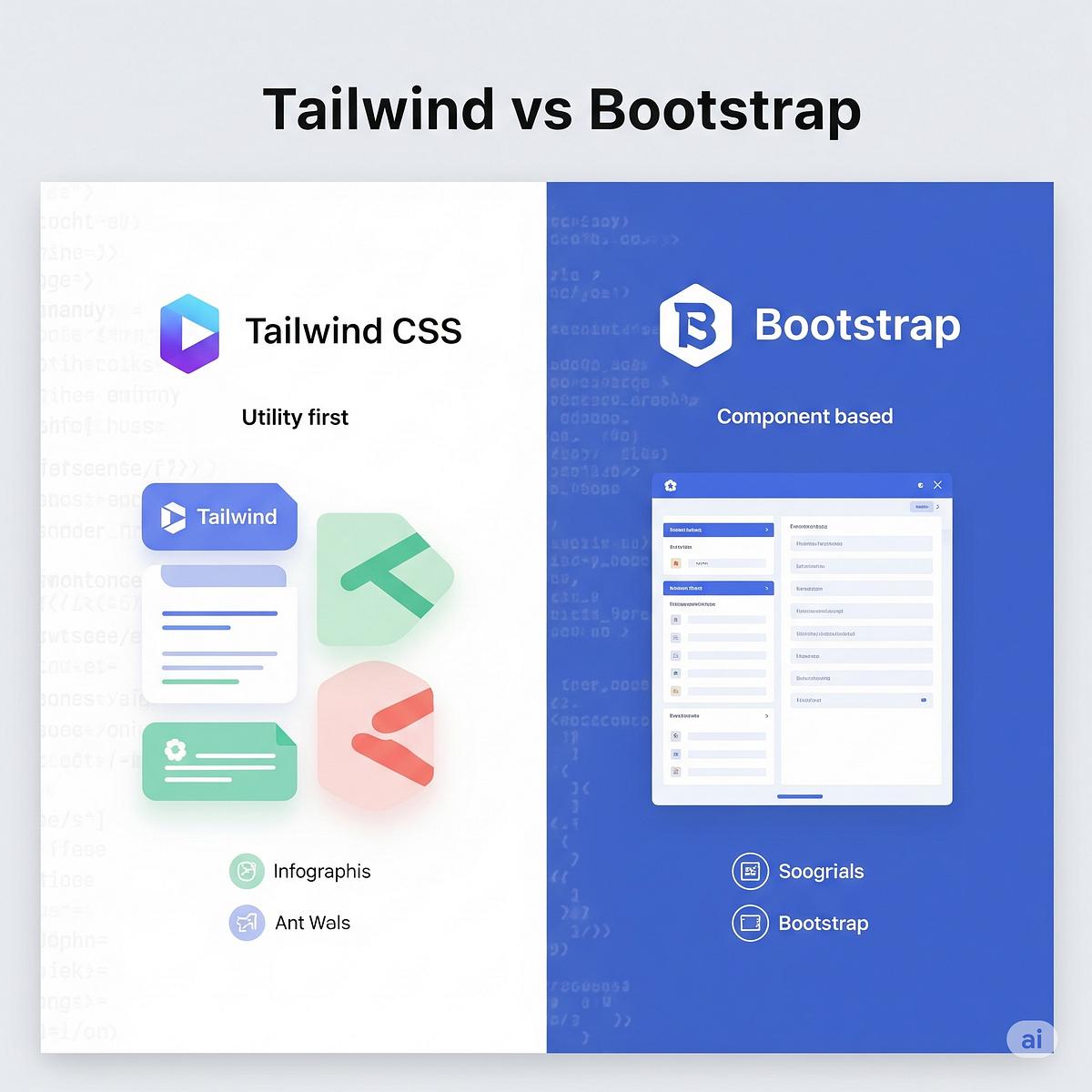
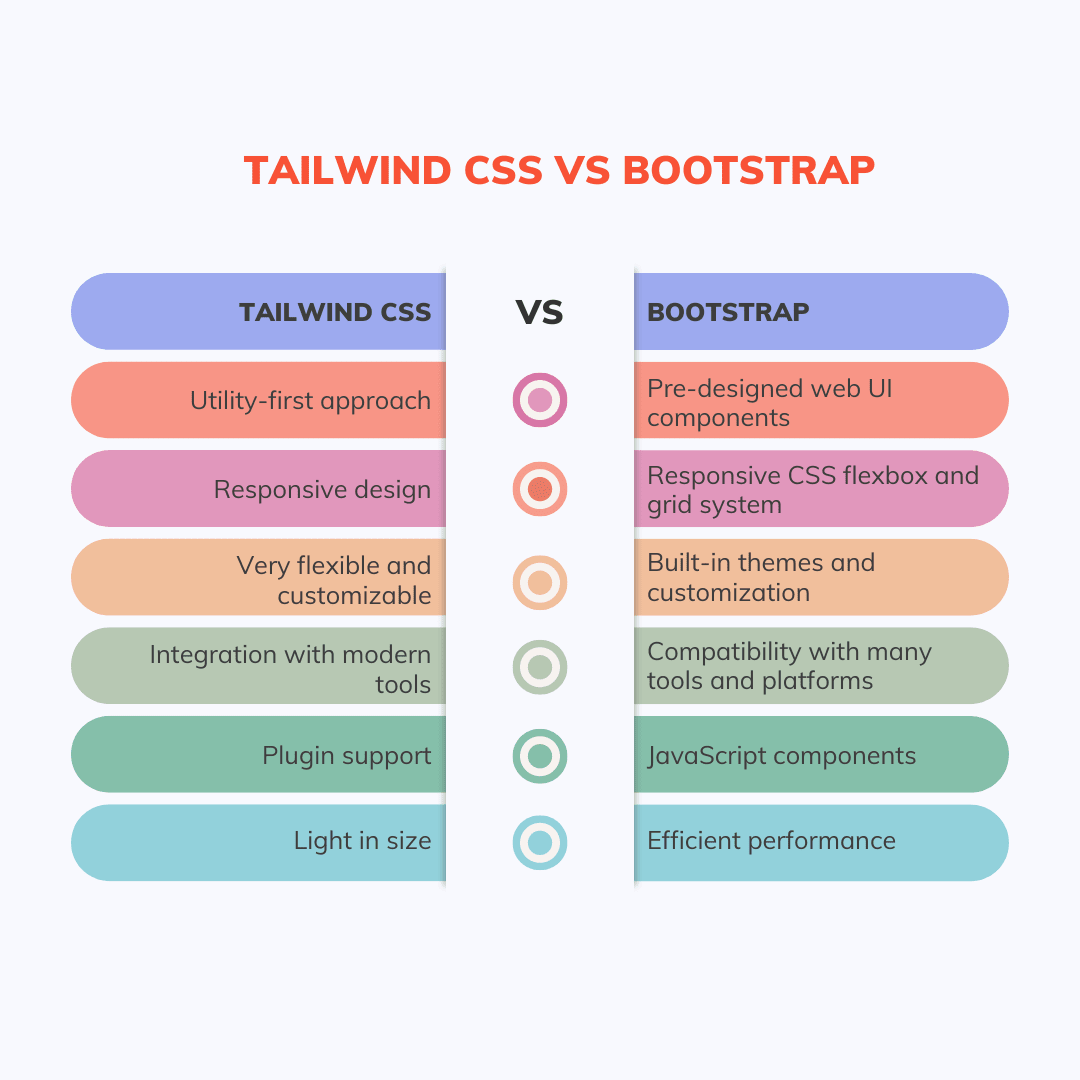
- Bootstrap → Component-first
- Tailwind → Utility-first
Bootstrap gives you ready-made components that you customize.
Tailwind gives you raw utilities to build everything from scratch.
This difference affects everything—performance, flexibility, learning curve, and scalability.
Key Differences at a Glance
Performance is one of the biggest deciding factors today.
- Tailwind generates CSS on-demand, resulting in much smaller file sizes.
- Bootstrap includes a full set of components, even if you don’t use them.
Studies show:
- Tailwind CSS bundles can be 5–7x smaller than Bootstrap
- Faster load times and better Core Web Vitals
Better Lighthouse performance scores
Development Speed & Workflow
Bootstrap
- Faster for beginners
- Prebuilt components reduce effort
- Ideal for rapid prototyping
- Limited customization
- Websites often look similar
- Requires overrides for unique design
Bootstrap allows developers to build interfaces quickly using ready-made UI elements.
Tailwind CSS
- Slower at the start
- Faster after learning curve
- No need to switch between HTML & CSS
- Fully customizable
- No predefined design constraints
- Ideal for modern UI/UX
Developers often become more productive with Tailwind after 1–2 weeks of usage.
Use Cases: When to Use What?
Use Bootstrap When:
- You need quick results
- You are a beginner
- You are building admin panels or dashboards
- You want consistent UI without design effort
Use Tailwind CSS When:
- You want a custom design
- Performance matters
- You are building SaaS or modern apps
- You prefer scalable architecture